
Choosing between Trastevere vs Monti isn’t about finding Rome’s “best” neighborhood—it’s about matching your travel priorities to the right urban ecosystem. Trastevere delivers postcard-perfect cobblestone chaos with nightlife that peaks at midnight. Monti offers a compressed village grid where vintage boutiques outnumber chain stores and locals still claim morning espresso bars. Both sit minutes from ancient Rome, yet they attract fundamentally different travelers and deliver opposing experiences. Continue with our guides to what to do in Trastevere, how to get there, and Trastevere at night.
What Defines Each Neighborhood’s Character?
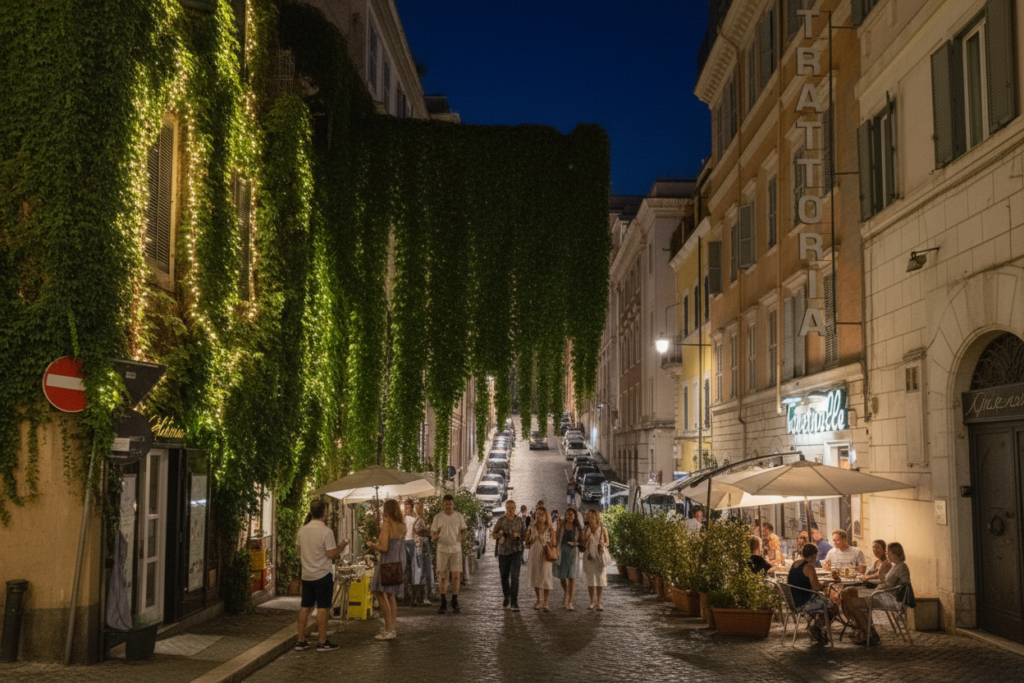
- Trastevere sprawls across the Tiber’s west bank as a former working-class enclave turned international magnet. Its medieval street pattern creates deliberate disorientation—GPS struggles here. Laundry lines stretch between ochre buildings. Street musicians claim the same corners nightly. The neighborhood operates on two speeds: tourist-clogged by day, party-central after 10 PM when aperitivo transitions to full nightlife mode.
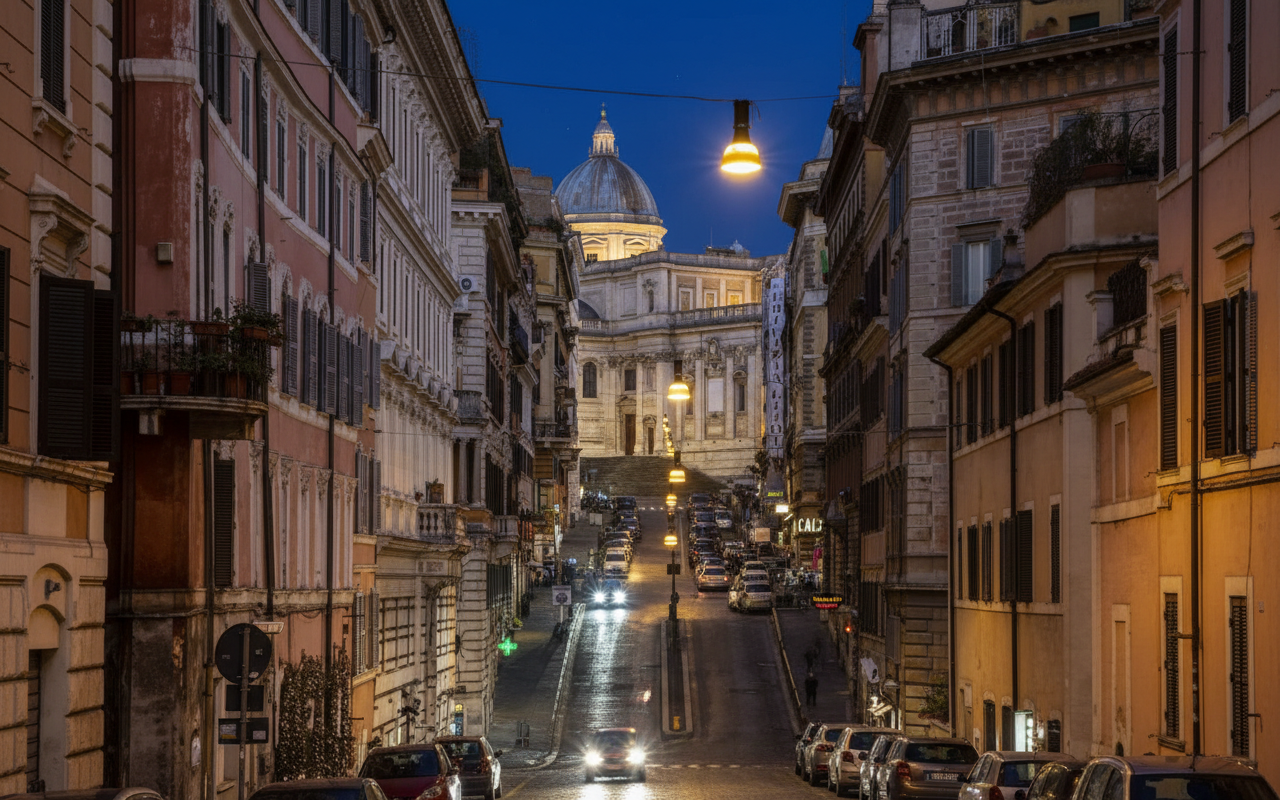
- Monti compresses into a walkable rectangle between the Colosseum and Termini Station. Rome’s original rione maintains human scale—you’ll cross it end-to-end in eight minutes. Independent designers occupy Via del Boschetto storefronts. The 80-year-old butcher still operates next to the specialty coffee roaster. Energy peaks during 7-9 PM aperitivo, then drops to conversational volume by 11 PM.
How Do Daily Rhythms Differ?
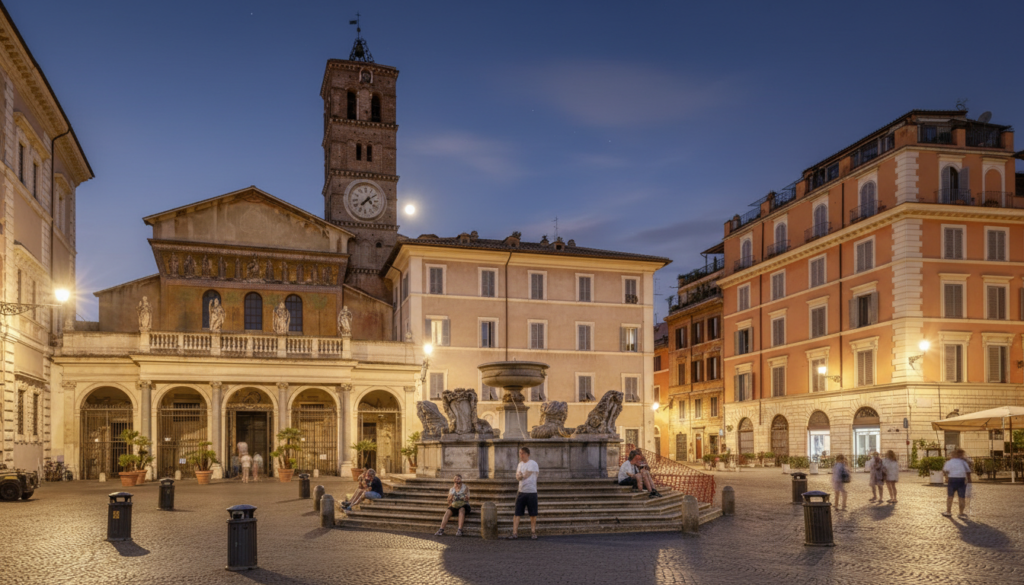
Trastevere runs hot from sunrise to 2 AM. Tour groups flood Piazza Santa Maria by 10 AM. Restaurants seat first dinner service at 6 PM for jet-lagged Americans, second service at 9 PM for Europeans. Bars hit capacity around 11 PM. You’ll navigate crowds to reach any destination. Weekend nights bring shoulder-to-shoulder density on main arteries.

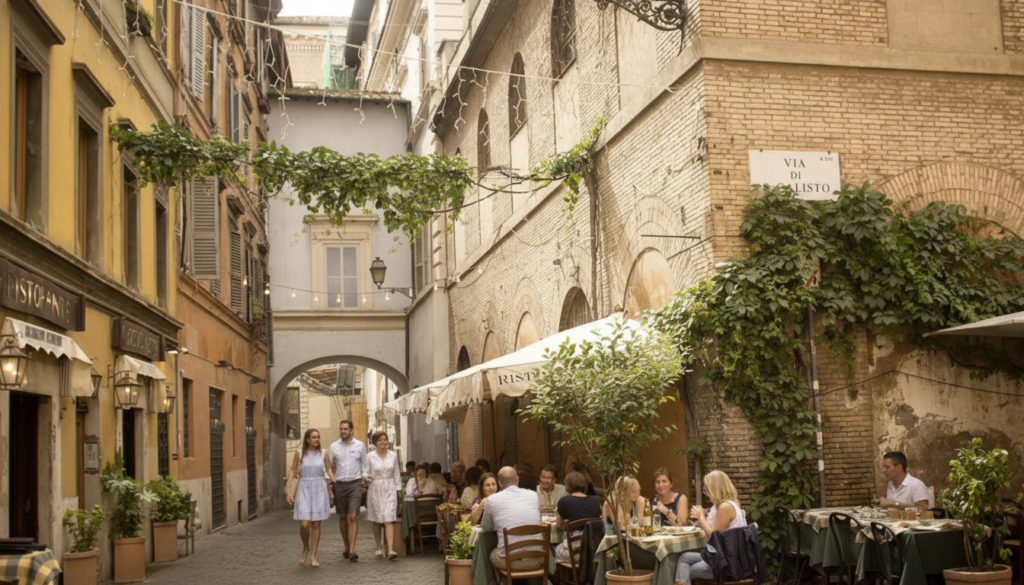
The authenticity equation shifts by block. Within 50 meters of major piazzas, restaurants deploy photo menus and multilingual hosts—classic tourist trap markers. Walk four blocks into residential pockets, and you’ll find trattorias where Roman families occupy half the tables and menus list only Italian descriptions.
Monti follows the neighborhood cadence. Mornings belong to residents collecting fresh cornetti and espresso. Afternoons draw vintage hunters and gallery browsers. Evenings center on wine bars with natural light and conversation-friendly acoustics. Most establishments close by midnight. The barista at your corner cafe will recognize you by day two.
The compromise: Limited late-night infrastructure. If your ideal evening ends at 2 AM with craft cocktails, you’ll take a 15-minute walk or €10 taxi to Trastevere or Testaccio.
Where Does Food Quality Peak?
Both neighborhoods deliver exceptional dining, but through different distribution models.
Trastevere operates on a two-tier system. Tourist traps dominate high-visibility zones—Piazza Santa Maria, Via della Lungaretta—where aggressive hosts and laminated menus signal mediocrity. Da Enzo al 29 serves textbook carbonara and amatriciana (expect 45-minute waits without reservations). Florio executes refined Roman classics in a white-tablecloth setting. Tonnarello portions could feed two adults from single plates.
For Roman-style pizza, Ai Marmi (“the morgue” for its marble tables) draws neighborhood loyalty with thin, crispy bases at €9-13. Late-night options include supplì (fried risotto balls) at Ivo or trapizzino (stuffed pizza pockets) at the original Trapizzino location.
Monti concentrates quality in tighter geography. La Carbonara (the 1906 original, not Trastevere’s tourist clone) serves the carbonara that defined the dish. Alle Carrette specializes in Neapolitan pizza with leopard-spotted, puffy crusts from high-temperature ovens. Urbana 47 executes creative small plates designed for wine pairing.
The neighborhood excels at breakfast and lunch infrastructure. Zest serves avocado toast and pour-over coffee—rare in traditional Rome. Zia Rosetta constructs gourmet sandwiches on house-baked focaccia. Prices run 12-18% below Trastevere’s tourist corridor rates.
“In Trastevere, apply the ‘five-minute rule’—walk five minutes from any major piazza before choosing a restaurant. If you see Italian grandmothers and families with young children, you’ve found authentic cooking. In Monti, trust handwritten daily menus that change based on market availability. Printed menus often signal tourist-focused operations.”
Nightlife: Monti or Trastevere for Your Evening Style?
| Dimension | Trastevere | Monti |
| Peak Activity | 10 PM – 2 AM | 7 PM – Midnight |
| Dominant Vibe | High-energy, international mixing | Intimate, conversation-focused |
| Cocktail Pricing | €10-14 | €8-11 |
| Music Profile | Live bands, DJ sets, street performers | Acoustic sessions, jazz trios, ambient |
| Crowd Density | Packed, standing-room common | Comfortable, seating available |
| Ideal Traveler | Social extroverts, party seekers | Wine enthusiasts, couples |
Trastevere dominates Rome’s nightlife hierarchy. Freni e Frizioni packs 200+ people for inventive cocktails and complimentary aperitivo spreads. Ma Che Siete Venuti a Fà crams 40+ craft beer taps into a 30-square-meter space. Big Hilda and Ombre Rosse maintain energy until 2 AM closing. Expect standing room, elevated conversation volume, and spontaneous social mixing with international travelers.
The acoustic cost: Noise penetrates residential streets until 1 AM. If you’re staying in Trastevere and require sleep before midnight, book accommodations three blocks from Piazza Trilussa or accept earplugs as standard equipment.
Monti prioritizes conversation over volume. Ai Tre Scalini attracts a local-expat mix to its corner perch for natural wines and people-watching. Blackmarket Hall combines cocktail service with vintage clothing racks. La Bottega del Caffè serves exceptional Negronis in a living-room atmosphere with velvet seating.
The demographic skews older (late 20s-40s) and more coupled than Trastevere’s backpacker energy. You’ll maintain normal conversation volume without shouting.
Which Neighborhood Optimizes Sightseeing Logistics?
Monti delivers superior access to ancient Rome’s core attractions. The Colosseum sits 400 meters away—a six-minute walk. Roman Forum and Palatine Hill require equal effort. You can exit your accommodation at 8:30 AM and enter the Colosseum at 9 AM opening, beating tour group arrivals by 90 minutes. Trajan’s Market, Imperial Forums, and Capitoline Museums all fall within a 10-minute radius.
Termini Station (Rome’s primary rail hub) sits 12 minutes on foot, enabling efficient day trips to Florence (90 minutes), Naples (70 minutes), or Pompeii (2.5 hours). The neighborhood lacks metro stations in its core, but Cavour station (Line B) anchors the eastern edge. Buses 75 and 117 provide connections to other districts.
Trastevere requires additional transit time to reach major sites. You’ll cross the Tiber via Ponte Sisto or Ponte Garibaldi, then walk 18-22 minutes to reach the Pantheon or Piazza Navona. The Colosseum sits 28-35 minutes away on foot. Zero metro stations serve the neighborhood—you’ll depend on buses (H, 8, 780) or tram 8 for connections.
This geographic isolation creates authentic neighborhood character but adds 25-35 minutes to most sightseeing trips compared to Monti-based accommodations. Budget this time when planning daily itineraries.
What Shopping and Cultural Differences Exist?
Monti built its reputation on independent retail. Via del Boschetto and Via Urbana host vintage clothing curators, artisan leather workshops, and jewelry designers working in-studio. Mercato Monti (weekend market) showcases 40+ local designers selling handmade clothing, accessories, and home goods. You’ll find unique pieces impossible to replicate elsewhere.
The neighborhood attracts creative professionals—graphic designers, architects, small gallery owners. This manifests in aesthetic details: carefully curated storefronts, high-quality street art, attention to typography and lighting in cafe design.
Trastevere blends souvenir commerce with traditional crafts. Main thoroughfares sell tourist magnets—refrigerator magnets, cheap leather goods, mass-produced “Italian” products. Side streets hide artisan workshops: bookbinders using 18th-century techniques, frame makers, antique furniture restorers. The Sunday Porta Portese flea market (technically adjacent to Trastevere) sprawls across multiple blocks with vintage Vespa parts, antique cameras, and knockoff designer goods.
The neighborhood retains working-class DNA in pockets. You’ll observe elderly women conversing on stoops, mechanics repairing cars on sidewalks, and family-run alimentari (grocery shops) operating since the 1960s.
The Evolution: How Gentrification Reshaped Both Districts
Twenty years ago, these neighborhoods occupied different positions in Rome’s urban hierarchy. Trastevere housed working-class Romans—fishermen, artisans, manual laborers. Rents remained affordable. Tourists crossed the Tiber for Sunday lunch, then departed. The area maintained authentic Roman character because residents were actually Roman.
Monti operated as a sketchy zone near Termini. Prostitution concentrated on Via Cavour. Drug dealing claimed certain corners. Romans avoided the area after dark. The neighborhood’s compressed streets and proximity to the train station created perceived danger.
The 2000s brought transformation to both. Trastevere gentrified first, accelerated by international media coverage and Instagram’s visual appeal. Rents tripled between 2005-2015. Long-term residents relocated to suburbs. Restaurants shifted menus toward tourist preferences—more English translations, less organ meat, standardized “safe” dishes. The neighborhood became a victim of its own photogenic appeal.
Monti followed a different trajectory. Artists and designers colonized the area around 2008, attracted by cheap rents and central location. They opened galleries, vintage boutiques, and wine bars. The transformation occurred organically, driven by creative residents rather than tourism boards. This preserved more authentic character—though rising rents now threaten that balance as landlords recognize the neighborhood’s value.
A failed experiment: Rome attempted creating “Trastevere 2.0” in Pigneto (east of Termini) around 2012. The city invested in infrastructure and promoted the area to tourists through marketing campaigns. It never achieved critical mass. Pigneto remained too distant from major sites, and the nightlife felt manufactured rather than organic. The lesson: neighborhood character emerges from genuine community, not municipal planning.
Common Strategic Mistakes Travelers Make
Mistake 1: Eating dinner at 6 PM in Trastevere
Many visitors finish sightseeing around 5:30 PM, feel hungry, and grab the first available table at 6-7 PM. This timing seems logical after a long day.
Here’s the actual consequence: You’re dining at restaurants that specifically target tourists on American schedules. Romans eat dinner at 9 PM or later. The best trattorias don’t open kitchens until 7:30 PM. You’re consuming reheated pasta from lunch service, not fresh-prepared dishes cooked to order.
The financial cost: You pay premium prices (€18-24 for carbonara) for mediocre execution. That same chef prepares superior versions at 9 PM for €14-16 at a location two blocks away where Roman families dine. You’re paying a 30% premium for inferior food by eating on the wrong schedule.
Mistake 2: Booking Trastevere accommodation while planning Colosseum-focused days
Travelers reserve Trastevere hotels for the Instagram-worthy streets and evening atmosphere, then realize ancient Rome sites sit 30+ minutes away. They spend 2-3 hours daily just on walking or waiting for infrequent buses.
Why this happens: The neighborhood photographs beautifully. The evening energy seems worth the logistical inconvenience.
What you actually lose: Over a four-day trip, you waste 8-12 hours on transit. That’s an entire day of sightseeing. You return exhausted each evening, too depleted to enjoy Trastevere’s nightlife—the primary reason you chose the location. You’d experience more of both ancient sites AND Trastevere’s scene by staying in Monti and visiting Trastevere for 2-3 dinners.
Mistake 3: Dismissing Monti as “too gentrified” or “inauthentic”
Some travelers skip Monti after reading it’s become “hipster” or “gentrified.” They assume it’s lost Roman character and costs more than alternatives.
This perception exists because travel blogs from 2015-2018 overhyped the neighborhood’s transformation, creating backlash.
The reality: Monti costs 15-20% less than Trastevere and maintains stronger local character than tourist-zone Trastevere. Yes, it has specialty coffee and vintage shops—but it also has the 80-year-old butcher, the family-run pasta shop, and the morning vegetable market where Romans buy produce. The “trendy” elements coexist with traditional Roman life rather than replacing it. You access both worlds at lower prices than Trastevere’s tourist corridor.
“Book Monti if you’re visiting June-August—Trastevere’s narrow streets trap heat and amplify noise, making sleep difficult. Choose Trastevere for October-November visits when you’ll spend evenings outdoors comfortably. Either way, avoid ground-floor rooms on primary streets unless you sleep through construction noise.”
Best Neighborhood in Rome: Trastevere, Monti, or Strategic Flexibility?
Choose Monti if you:
- Prioritize efficient access to Colosseum, Forum, and ancient sites
- Prefer quieter evenings and sleep before midnight
- Value independent boutiques and artisan goods
- Operate on a tighter budget (15-20% savings)
- Appreciate compact, navigable neighborhoods
Choose Trastevere if you:
- Prioritize nightlife and social atmosphere over sleep
- Don’t mind crowds and elevated noise levels
- Want classic “romantic Rome” aesthetics for photos
- Plan extensive Vatican and western Rome exploration
- Enjoy late dinners (9-10 PM) and bar-hopping until 1-2 AM
Neither choice is objectively wrong. Both neighborhoods deliver genuine Roman experiences through different lenses. Monti feels like discovering an insider secret. Trastevere feels like joining a party everyone’s discussing.
The optimal strategy for where to stay when deciding Monti or Trastevere for stay? Choose Monti for logistical efficiency and budget optimization, then spend 2-3 evenings exploring Trastevere’s dining and nightlife scene. You’ll experience both without the compromises of committing entirely to either.
Rome rewards flexibility. These neighborhoods sit only 25 minutes apart on foot. The Trastevere vs Monti debate doesn’t require an absolute answer—you’re never locked into one choice for your entire visit.