
Every July, while tourists crowd the Colosseum and Trevi Fountain, something magical happens in Trastevere. The cobblestone streets fill with locals celebrating Festa de Noantri—a two-week festival that’s been the neighborhood’s heartbeat for over 400 years. This isn’t a show put on for visitors. It’s Rome showing you its real face. Continue with our guides to what to do in Trastevere, the Basilica of Santa Maria, and Trastevere at night.
What exactly is the Noantri Festival in Rome?
Festa de Noantri (literally “Our Festival” in Roman dialect) is Trastevere’s annual celebration honoring the Madonna del Carmine. It runs for two weeks starting the first or second Saturday after July 16th. The festival blends Catholic tradition with street parties, processions, live music, and food stalls that transform the entire neighborhood into an open-air celebration.
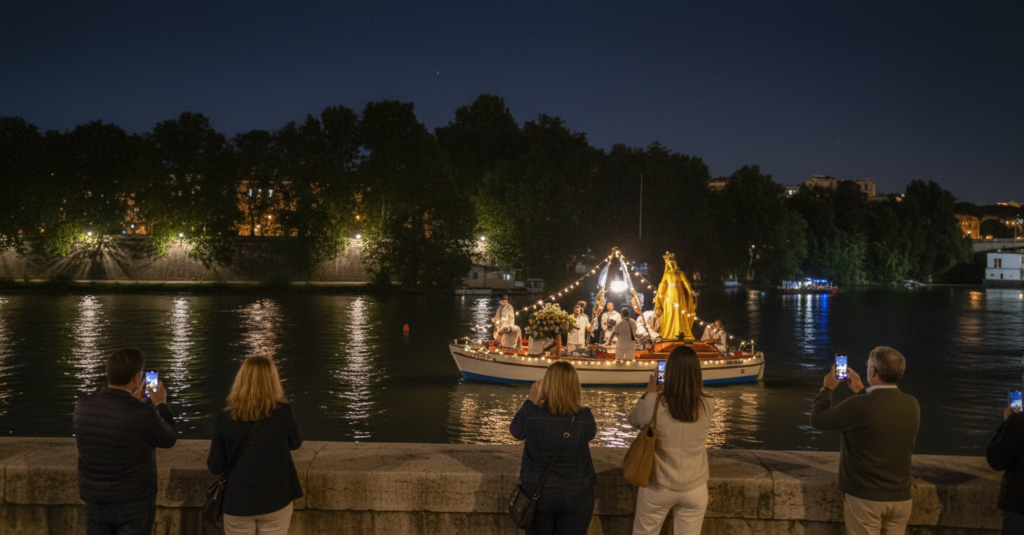
The festival started in 1535 when fishermen found a wooden statue of the Madonna floating in the River Tiber. They brought it to the Church of San Crisogono, and Trastevere residents claimed it as their own. The name itself—”de Noantri” (of us)—reflects the neighborhood’s fierce independence and pride.
When should you plan your Trastevere Festival July visit?
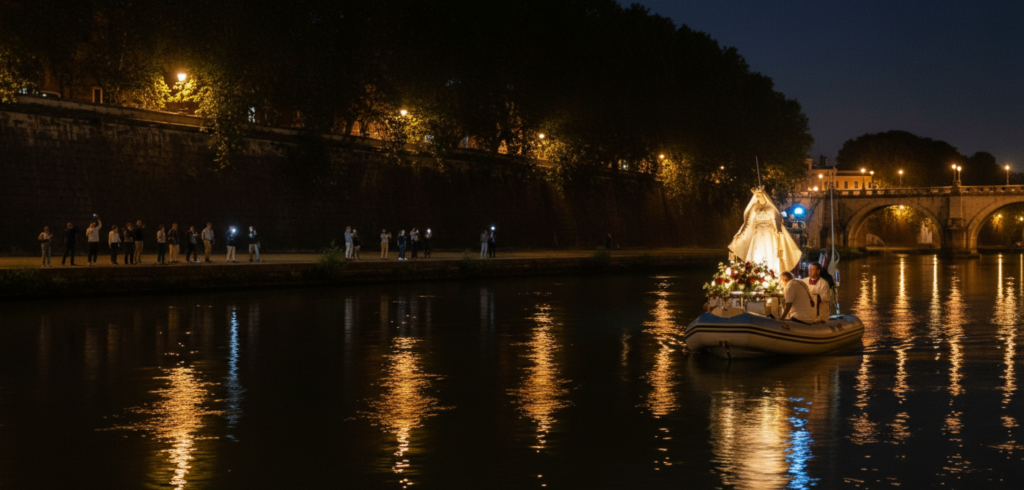
The festival officially kicks off on the Saturday closest to July 16th and runs through the last Sunday of July. The opening night features the grand procession. The closing Sunday brings the biggest crowds and most elaborate celebrations.
Key dates to mark:
- Opening Saturday evening: Religious procession starts at 6 PM from Church of Sant’Agata
- Mid-week evenings: Street performances and concerts begin around 8 PM
- Final Sunday: All-day celebration with the statue’s return procession at 7 PM
The festival runs every evening from roughly 7 PM until midnight or later. Weekends draw the biggest crowds. If you want to experience the authentic atmosphere without fighting through masses of people, visit on a Tuesday or Wednesday evening.
How did this tradition survive four centuries?
In the 1500s, Rome’s neighborhoods operated almost like independent villages. Each had its own identity, patron saint, and festivals. Trastevere—literally “across the Tiber”—was home to fishermen, dockworkers, and artisans who felt distinctly separate from the rest of Rome.
When the Madonna statue appeared, Trastevere residents saw it as divine confirmation of their special status. The Vatican tried several times to move the statue to more prominent churches. Trastevere refused. Every attempt sparked near-riots.
By the 1800s, most neighborhood festivals had faded as Rome modernized. Festa de Noantri survived because Trastevere residents funded it themselves, refusing outside control. During World War II, when celebrations were banned, locals held secret gatherings in courtyards. The festival became an act of cultural resistance.
Today’s version balances tradition with modern entertainment, but the core remains unchanged: Trastevere celebrating itself.
Where does everything happen in the district?
The festival centers on three main areas, all within a 10-minute walk of each other.
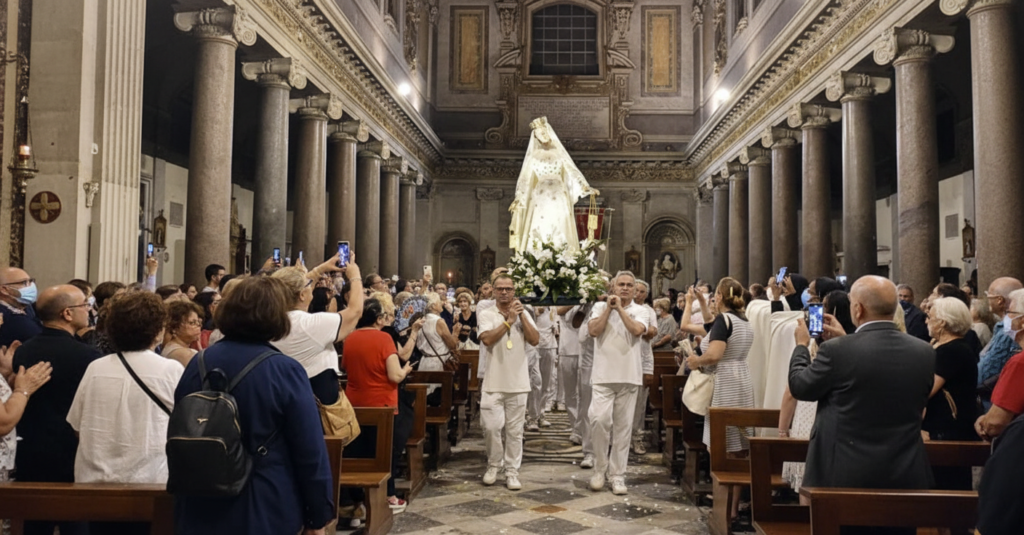
- The Church of Sant’Agata (Piazza di Sant’Agata) serves as the spiritual headquarters. The Madonna statue rests here during the festival. The opening and closing processions both start from this small church tucked into Trastevere’s backstreets.
- Piazza di Santa Maria in Trastevere becomes the main gathering point. The square fills with temporary stages for concerts, dance performances, and poetry readings. Food vendors line the perimeter. This is where you’ll find the densest crowds and most electric atmosphere.
- Viale Trastevere and surrounding streets host the traditional street fair. Dozens of stalls sell everything from porchetta sandwiches to handmade crafts. The carnival rides and games that once defined Italian summer festivals still operate here—a nostalgic touch that delights local families.
The Procession of Madonna Fiumarola: An unmissable experience
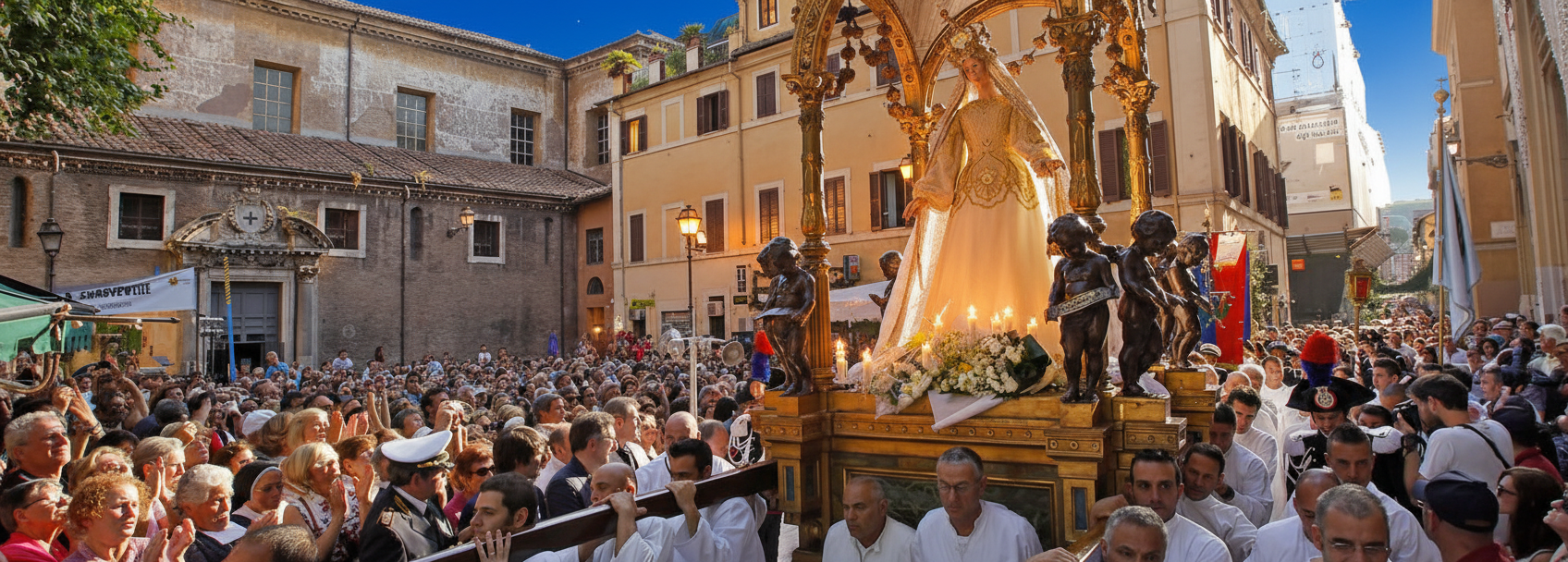
The procession isn’t a solemn, quiet affair. It’s loud, chaotic, and deeply moving. Dozens of men carry the heavy wooden statue of the Madonna through narrow streets on a decorated platform. The route winds through Trastevere for nearly two hours, stopping at significant locations for prayers and songs.
Residents hang tapestries and flowers from their windows. Some families have decorated the same balcony for generations. As the statue passes, people throw flower petals and applaud. Older women cry. The brass band plays traditional hymns that echo off the medieval buildings.
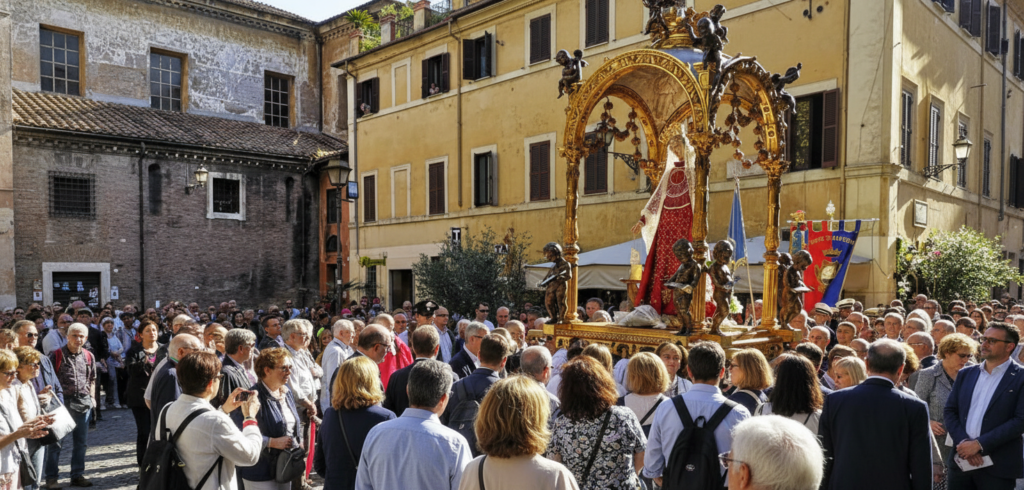
The procession route changes slightly each year, but always includes Via della Lungaretta, Piazza in Piscinula, and the riverside. Get there 30 minutes early to claim a spot with a clear view. The best vantage point is near Piazza in Piscinula, where the narrow streets create an intimate atmosphere.
Don’t just watch the statue. Watch the faces of the people carrying it and following behind. You’ll see three generations of the same family walking together, continuing a tradition their great-grandparents started. That’s the real story.
The strongest argument against attending: Is it too touristy now?
Some longtime residents complain that Festa de Noantri has lost its authentic character. They point to the increasing number of commercial vendors, the tourists with cameras, and the bars that jack up prices during festival weeks.
This criticism holds water in specific areas. Piazza di Santa Maria in Trastevere, already a tourist magnet, does feel more like a performance during the festival. Some traditional elements—like the poetry competitions in Roman dialect—have been scaled back or moved to less prominent time slots.
However, this view misses the bigger picture. Walk two blocks off the main square, and you’ll find locals gathering exactly as they have for decades. The side street processions, the neighborhood dinners, the impromptu singing sessions—these continue unchanged. The festival has adapted to survive, but its heart remains intact. For visitors willing to explore beyond the obvious spots, the authentic experience is absolutely still there.
What traditional dishes should you eat during the festival?
Festa de Noantri showcases traditional Roman working-class cuisine. Forget the tourist-trap carbonara. This is food that sustains fishermen and laborers.
Porchetta dominates the street food scene. Whole roasted pork, seasoned with rosemary, garlic, and wild fennel, sliced thick and served on crusty bread. The best vendors have lines 20 people deep. Worth the wait.
Supplì (fried rice balls with mozzarella) appear at every food stall. The festival version is larger and richer than what you’ll find in regular Roman restaurants. Bite carefully—the molten cheese center will burn your mouth.
Maritozzo con la panna provides the traditional dessert. This sweet bun split and filled with whipped cream originated in Trastevere. During the festival, bakeries compete to make the biggest, most decadent versions.
The drink of choice is vino dei Castelli Romani—simple white wine from the hills outside Rome, served ice-cold in plastic cups. It’s not sophisticated, but it’s what locals have drunk at this festival for generations.
Several restaurants offer special festival menus featuring dishes rarely seen otherwise: coda alla vaccinara (oxtail stew), pajata (veal intestines in tomato sauce), and rigatoni con la pajata. These aren’t for everyone, but they represent authentic Roman cuisine at its most traditional.
Three mistakes that will ruin your festival experience
- Arriving at 9 PM expecting to find a table. Many visitors assume they can stroll into Trastevere mid-evening and grab dinner at a restaurant. During Festa de Noantri, restaurants book solid days in advance. The outdoor tables you see? Reserved since last week. The cost: You’ll waste 90 minutes wandering hungry while the best performances happen. Solution: Eat street food or make reservations three days ahead.
- Staying only in Piazza di Santa Maria. The main square offers the most obvious entertainment, so tourists cluster there. It’s crowded, loud, and honestly, a bit generic. The real magic happens in the smaller piazzas and side streets where neighborhood groups set up their own celebrations. The cost: You’ll miss the intimate moments that make this festival special—the grandmother teaching her granddaughter traditional songs, the impromptu accordion performances, the neighbors sharing wine on their stoops. Walk five minutes in any direction from the main square.
- Wearing uncomfortable shoes. Trastevere’s streets are sampietrini—small, uneven cobblestones that have destroyed countless ankles and ruined many evenings. Add festival crowds, and you’re constantly stepping, dodging, and standing. The cost: After an hour, your feet scream. After two, you’re done. You’ll miss the late-night performances when the festival truly comes alive. Wear your most broken-in walking shoes or supportive sandals.
What’s the evening celebration schedule beyond the processions?
Each evening brings different entertainment, though the exact schedule varies year to year. The pattern remains consistent.
Music performances range from traditional Roman folk songs to contemporary Italian pop. Stages in different piazzas host simultaneous concerts, so you can choose your vibe. The folk music typically happens in smaller venues, while the main stage books more commercial acts.
Street theater and puppet shows appear throughout the neighborhood. These performances, often in Italian or Roman dialect, entertain local children but can charm anyone who appreciates physical comedy and traditional storytelling.
Art exhibitions pop up in churches and community centers. Local artists display work inspired by Trastevere’s history and the festival’s themes. Quality varies, but admission is free.
Dance performances include both traditional folk dances and modern interpretations. The most interesting shows blend old and new—traditional tarantella rhythms with contemporary choreography.
Fireworks close out the final Sunday. Not elaborate by modern standards, but the setting—medieval buildings, the River Tiber, crowds singing together—creates something memorable.
Download the official program from the Municipio Roma I website a week before the festival starts. The printed schedules you’ll find around Trastevere are often outdated or incomplete. The digital version updates in real-time if performances change.
Is Festa de Noantri worth adjusting your Rome itinerary?
If you’re in Rome during late July anyway, absolutely yes. The festival offers a window into Roman neighborhood culture that’s increasingly rare. You’ll see how locals celebrate, what they eat, how they interact with centuries of tradition.
If you’re planning a Rome trip specifically around the festival, consider your priorities. This isn’t Carnival in Venice or Palio in Siena—massive spectacles that justify building an entire trip around them. Festa de Noantri is more intimate, more local, and less visually dramatic.
The ideal visitor is someone who already planned a July Rome trip and wants to experience something beyond the standard tourist circuit. You’ll spend 2-3 evenings at the festival, not your entire vacation.
Families with children will find plenty to enjoy—the carnival rides, street performers, and relaxed atmosphere work well for kids. The festival runs late, but Italian children stay up late too, so yours won’t be the only ones out at 10 PM.
Comparing Festa de Noantri to other Roman summer festivals
| Festival | When | Neighborhood | Atmosphere | Best For |
| Festa de Noantri | Mid-late July | Trastevere | Traditional, local, religious roots | Cultural immersion, authentic Roman experience |
| Estate Romana | June-September | Citywide | Contemporary, arts-focused | Concerts, modern performances |
| Lungo il Tevere | June-August | Tiber riverbanks | Casual, commercial | Outdoor dining, shopping |
| Festa di San Giovanni | June 23-24 | San Giovanni | Religious, traditional | Witnessing major Roman tradition |
Festa de Noantri occupies a sweet spot: traditional enough to feel authentic, accessible enough for visitors to enjoy without deep cultural knowledge.
The festival reveals a truth about Rome that the ancient monuments can’t: this city isn’t a museum. It’s a living place where people maintain traditions not for tourists, but for themselves. Festa de Noantri survives because Trastevere residents need it, not because visitors want it.
Show up with curiosity and comfortable shoes. Eat street food. Watch the procession. Wander the side streets. You won’t understand everything you see, and that’s fine. You’re witnessing something real, something that will continue long after you’ve gone home.